
Red Light Therapy at Home: Does It Actually Work? My Honest Experience Managing Inflammation + Arthritis

Red light therapy is everywhere right now.
Panels. Face masks. Handheld wands.
Athletes use it. Dermatologists recommend it. Biohackers swear by it.
But the real question is:
Does red light therapy actually work — or is it just another wellness trend?
As someone managing elevated inflammation markers, autoimmune tendencies, and arthritis, I’m always looking for ways to support my body beyond the basics.
Red light therapy is not a replacement for medical care.
But it has become a consistent part of my wellness rhythm.
And I do notice a difference.
Today I’m sharing:
• The science behind red light therapy
• What research actually says
• The exact devices I use at home
• Whether it’s worth the investment
⸻
What Is Red Light Therapy?
Red light therapy (also called photobiomodulation therapy) uses specific wavelengths of red and near-infrared light — typically between 630–850 nanometers — to stimulate cellular function.
Here’s what happens:
The light penetrates the skin and underlying tissue, stimulating the mitochondria — the energy producers in your cells — to generate more ATP (adenosine triphosphate).
ATP = cellular energy.
When cells have more energy, they repair and regenerate more efficiently.
This is why red light therapy at home is commonly used for:
• Skin rejuvenation
• Collagen production
• Inflammation support
• Muscle recovery
• Joint discomfort
⸻
Does Red Light Therapy Really Work? What the Research Says
Let’s get a little science-y.
Red Light Therapy for Skin & Collagen
Clinical studies using wavelengths around 630–660nm have shown improvements in:
• Fine lines
• Skin elasticity
• Skin smoothness
• Collagen density
A 2014 study published in Photomedicine and Laser Surgery found statistically significant improvements in collagen density and skin complexion after 30 treatment sessions.
Important note:
These improvements were seen with consistent use.
Not once. Not occasionally.
Consistency matters.
⸻
Near Infrared Light Therapy for Inflammation & Recovery
Near-infrared light (around 810–850nm) penetrates deeper into tissue.
Research suggests these wavelengths may:
• Reduce inflammatory markers
• Improve circulation
• Accelerate muscle recovery
Some clinical trials have demonstrated up to 40% faster muscle recovery in certain populations when used consistently.
There is also research supporting red light therapy for joint discomfort and chronic inflammation.
Is it a miracle cure? No.
Is it supported by emerging and growing research? Yes.
⸻
Why I Personally Started Using Red Light Therapy
Because inflammation is not theoretical for me.
I’ve had elevated inflammation markers on labs.
I manage autoimmune tendencies.
I have arthritis.
That means I’m constantly aware of recovery, mobility, and systemic stress.
Red light therapy is not something I use instead of medical care — it’s something I use alongside healthy habits.
When I’m consistent with it, I feel:
• Less stiff
• Less inflamed
• More mobile
That’s my personal experience.
And for me, that’s meaningful.
⸻
The Most Important Factor: Consistency
If you’re searching “red light therapy before and after results,” here’s the honest truth:
Most studies showing results involve:
• 3–5 sessions per week
• 8–12 weeks minimum
• Proper therapeutic wavelengths
This is not an occasional beauty gadget.
It’s cumulative cellular support.
When I fall off? I notice.
When I stay consistent? I feel better.
⸻
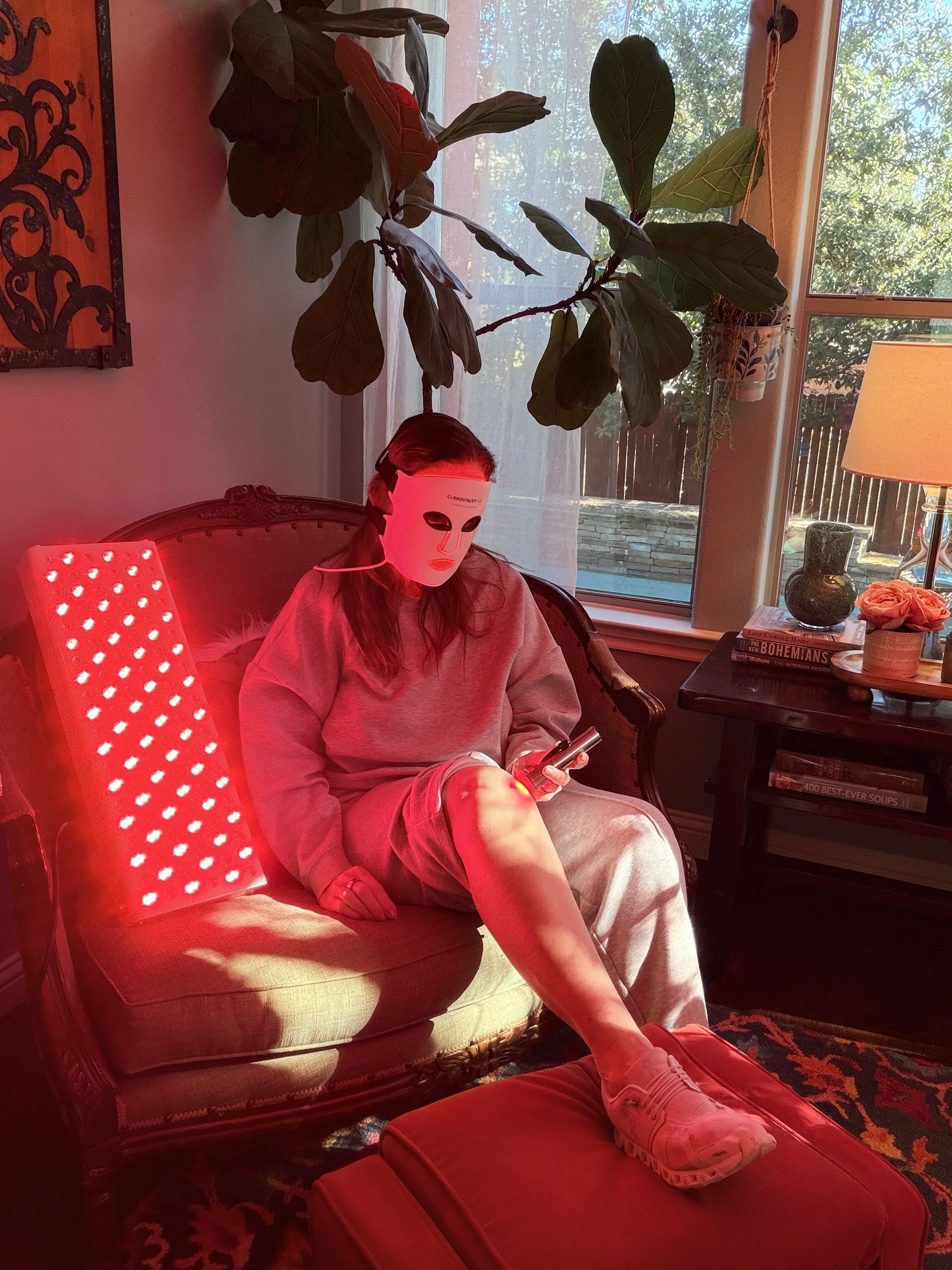
The Red Light Therapy Devices I Use at Home
These are the exact devices in my routine.
⸻
1. Best Red Light Therapy Panel for Full Body Support
MitoPRO Red Light Therapy Panel
This panel combines:
• 660nm red light (skin level)
• 850nm near-infrared light (deep tissue)
This is the device I notice the biggest difference with.
I use it for:
• Muscle recovery
• Inflammation support
• Overall circulation
When I use it 4–5 times per week for 10–15 minutes per area, I genuinely feel less tension and stiffness.
If I could only keep one device, it would probably be this one.
⸻
2. Best Handheld Red Light Therapy Wand for Targeted Areas
LifePro Infrared & Red Light Therapy Torch
This is perfect for:
• Knees
• Neck tension
• Targeted inflammation
• Travel
Because it’s smaller and focused, it allows me to concentrate on specific areas that need attention.
With consistent use, I notice relief in irritated or tight areas.
⸻
3. LED Face Mask for Wrinkles & Glow
CurrentBody Skin LED Face Mask
This mask is designed to support:
• Fine lines
• Collagen stimulation
• Even skin tone
I’ve only recently started using this one consistently.
What I notice immediately:
• A visible glow after use
• Calmer skin
• Subtle brightness
The brand recommends 8 weeks of regular use to see improvements in fine lines and firmness.
I’m committed to finishing that full window before drawing final conclusions — but so far, it feels promising.
⸻
Is Red Light Therapy Worth It?
Here’s my honest answer.
Red light therapy at home is worth it if:
✔ You’re willing to commit to consistency
✔ You prefer natural support over invasive treatments
✔ You value long-term cellular health
✔ You understand that results are cumulative
It is not dramatic overnight transformation.
It’s steady support.
And personally, I believe in habits that compound.
⸻
Trend or Tool?
Red light therapy is definitely trending.
But unlike many trends, this one has legitimate research behind it — particularly for inflammation support, recovery, and skin health.
For me:
✔ The panel makes a noticeable difference
✔ The wand supports targeted discomfort
✔ The face mask gives an immediate glow (long-term results pending)
It has become part of my wellness lifestyle — not a gimmick.
In the season,
Candace
⸻
If you’re curious about starting red light therapy at home, I’ve linked the exact devices I personally use above. Disclosure: As an Amazon Associate, I earn from qualifying purchases.
⸻
Medical Disclaimer
This post reflects my personal experience and is for informational purposes only. Red light therapy is not a substitute for medical diagnosis, treatment, or professional healthcare advice. Always consult your healthcare provider before beginning any new wellness treatment, especially if you have medical conditions or are managing autoimmune or inflammatory concerns.